You Might Have Celiac If . . .

By Mallorie Williams, GIG Outreach
You might have celiac if a simple trip to the grocery store turns into a label-reading marathon; you never leave home without at least two emergency snacks, and dining out feels less like dinner and more like a full-team briefing.
You might also have celiac if every meal involves a little mental math. Was that sauce gluten-free? Did the server mention cross-contact? Do I trust this oat milk? Suddenly, eating becomes part routine, part detective work, and part strategy.
If this sounds familiar, well then, welcome, and just know you are in good company.
Whether you are newly diagnosed or have been gluten-free long enough to spot hidden barley from across a grocery aisle, this journey comes with real challenges, unexpected humor, and plenty of moments that only our community truly understands.
The best part? Somewhere between the grocery store saga, the emergency snack stash, and the restaurant interrogations, it gets easier. Not all at once, and not without the occasional frustrating moment, but easier. What feels brand new and overwhelming right now will one day feel like second nature, and you will get there faster than you think.

The Grocery Store Saga
What currently feels like the most chaotic part of your new lifestyle will eventually become one of the most rewarding.
Products you used to toss in your cart without a second thought now require a full label investigation of ingredient lists, manufacturing warnings, and yes, occasionally a quick Google search in the middle of the cereal aisle while someone tries to squeeze past your cart. No shame. We have all been there.
For a while, every shopping trip feels like navigating a maze with no map. But slowly, that maze starts to look familiar. Your mental map fills in. You learn which brands to trust, which stores carry the best gluten-free options, and which products are worth the splurge versus which ones taste like cardboard with ambition. You finally have a system, and then your grocery store decides to rearrange every single aisle, and suddenly your finely tuned mental map is useless. The gluten-free section has moved. Nobody announced this. You find out the hard way. You adapt, because at this point, adapting is basically your superpower.
Then comes the moment every gluten-free person remembers . . . you find a product that tastes just as good as the original. Sometimes better. That small victory hits differently when you have been searching for it. Those wins add up, and before long, grocery shopping goes from a stressful obligation to an oddly satisfying mission. There is a quiet pride that comes with being the most label-literate person in any given aisle. Own it. And once you have your safe favorites locked in, you learn the next golden rule of celiac life quickly: never, ever leave home without snacks.
Emergency Snack Stash
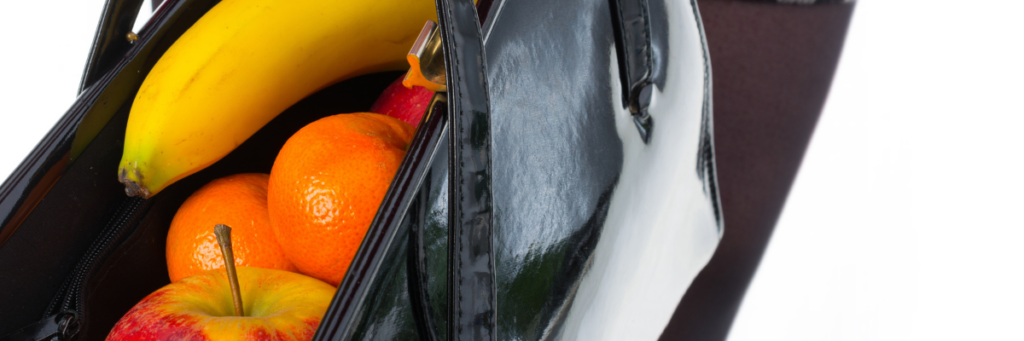
At some point in this journey, your bag stops being a bag and becomes a mobile pantry. And honestly? This is one of the best habits you will ever build.
A protein bar in your purse. Crackers in the glove box. A backup snack in your desk drawer and, let’s be honest, a secondary emergency snack tucked somewhere for when things get unpredictable. You packed snacks for a 20-minute car ride just in case. You showed up to a three-hour work event already fed because you knew the catered spread was going to be a hard no.
Before your diagnosis, this level of snack preparedness might have seemed a little extreme. Now it is just a random Tuesday.
The beauty of this habit is what it gives you: freedom. When you know you have safe food with you, you stop dreading the unknown. Long road trips, delayed flights, school events, and last-minute “let’s grab food somewhere” situations no longer throw you off, even when the menu is mostly pasta and bread, because you are covered. For the newly diagnosed, building this habit early is one of the most practical things you can do for yourself. For those who have been at this for years, your snack game is legendary, and it deserves to be respected.
Of course, being prepared at home is one thing. Taking that same energy into a restaurant is a whole different skill set, and one that comes with its own learning curve, its own victories, and its own collection of memorable server interactions. But it is one you will absolutely develop.
Restaurant Interrogations
What used to be a casual dinner is now a multi-step process, and there is no point pretending otherwise.
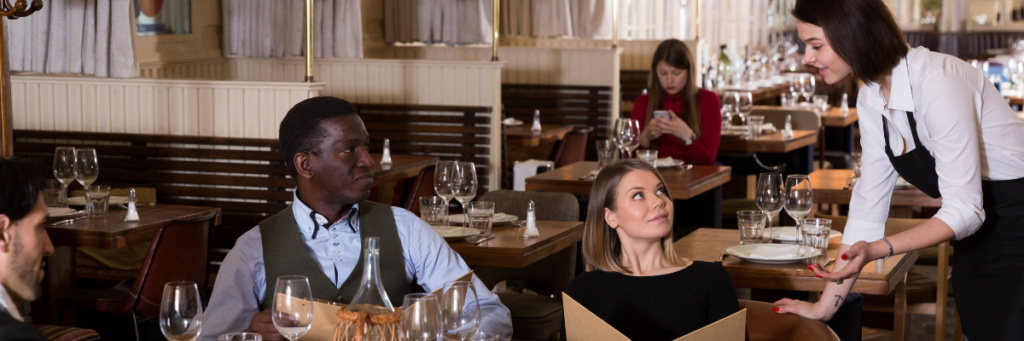
It starts before you leave the house. You check the menu online, scan for a gluten-free section, and mentally flag anything that looks questionable. You might call ahead. You probably should call ahead. You end up calling ahead. Then you arrive, ask your server about gluten-free options, and explain what cross-contact means because, surprisingly, not everyone in the food service industry has had that training yet. Your dining companions have learned to order their drinks while you handle this portion of the evening.
Is it a lot? Yes. Is it completely worth it not to spend the next three days feeling terrible? Absolutely.
The good news is that restaurants are getting better. More kitchens understand celiac disease and take cross-contact seriously. Over time, you find your safe spots, the places that get it, where the staff knows what you need before you finish asking. Those restaurants earn your loyalty for life, and you will recommend them to every newly diagnosed person you ever meet.
One thing that never fully goes away, no matter how experienced you become, is the quiet mental checklist running in the background of every food situation. It just gets a lot faster.

Mental Math Is Real
Nobody warns you about this part, but it is one of the most universally relatable parts of life with celiac disease.
Is there going to be something safe to eat at this party? Should I eat before I go, just in case? That dish looks gluten-free, but it was sitting next to a breadbasket, so does that count? Is it even worth asking?
In the beginning, this mental math is exhausting. You are learning the rules while also trying to live your life, and it can feel like your brain has taken on a second full-time job. But here is what nobody says enough: it gets easier. Not because the stakes change. Celiac disease requires the same level of care no matter how long you have had it. It gets easier because the math gets faster. The knowledge becomes automatic. What once took real conscious effort eventually runs quietly in the background, and you stop feeling like every meal is a test you might fail.
For those newly diagnosed, give yourself grace. This learning curve is real, and you are navigating something genuinely complicated. For the long-timers, remember when you did not know any of this? Look how far you have come. And the best part is that you get to share it with the people who are just getting started.

You’ve found your people
Here is something nobody mentions in the doctor’s office on diagnosis day: celiac disease comes with a community, and it is one of the most resourceful, generous, and genuinely funny groups of people you will ever encounter.
These are the people who share their favorite gluten-free brands in an online group at 11 p.m., who warn you about a restaurant that quietly changed its menu, who celebrate when you find a gluten-free pasta that actually holds up, and who will laugh with you about the time you grabbed the wrong crackers and paid for it. They understand things that are hard to explain to people who have never lived it. The relief of finding a safe meal when you are traveling, the frustration of being that person at the table again, the particular exhaustion of constantly educating people, and the deep gratitude when someone in your life actually listens.
Whether you are brand new to this or a seasoned gluten-free veteran, you belong here. The diagnosis is not the end of good food, fun meals, or a full life. It is the beginning of a different approach to all of it, one that comes with a steep learning curve, a well-stocked snack drawer, and a group of people who will have your back every step of the way.
Welcome to the club. We saved you a (gluten-free) seat.