Skin Health for Beginners

Written by C. Kelly, dietitian
Winter can be tough on our skin. Cold air and indoor heat can make it feel dry, itchy, or flaky. While weather plays a big role, your skin can also change when you’re newly diagnosed with a gluten-related disorder. As your body begins to heal, especially if you’re managing celiac disease or dermatitis herpetiformis (DH), your skin may need a little extra care. Understanding what’s happening can make this stage of the journey feel less confusing and a lot more manageable.
Relationship Between Gluten and Skin
Gluten affects the skin only when gluten is eaten. It’s a large protein that cannot be absorbed through the skin, so touching gluten does not trigger a gluten-related reaction.
Research shows gluten can play a role in several skin conditions, but only a few have a clear, proven connection to celiac disease, most notably dermatitis herpetiformis (DH). Other conditions sometimes linked to gluten or celiac disease include cellulitis, alopecia areata, and psoriasis, but the research in these areas is still growing.
Dermatitis Herpetiformis (DH) is the skin form of celiac disease. It appears as a very itchy, raised, pimple-like rash. It can show up anywhere, but it most often appears on places we put pressure on—elbows, knees, back, and buttocks. Someone with DH may or may not have stomach issues or the classic symptoms of celiac disease.
Treatment includes a strict gluten-free diet, and many people also use the medication Dapsone to provide relief while the diet begins to work.
As the gut heals on a gluten-free diet, many people notice their skin improving too. For beginners, this is a hopeful sign that healing is happening both inside and out.
Gluten in Skin Care Products
Gluten cannot be absorbed through the skin. Lotions, shampoos, and makeup are not a risk unless they end up in your mouth. The real concern is accidental ingestion, especially with lip products. If you lick your lips or touch your mouth without thinking, you may swallow small amounts of whatever is on your skin.
Gluten can sometimes cause other types of irritation, like stinging if a product gets into your eyes or onto open skin, but these reactions are not related to celiac disease. They are simply an irritant or allergy reactions, not a gluten-triggered autoimmune response.
If you touch your face often or use lip products throughout the day, choosing gluten-free (GF) skin care products can give you peace of mind. Most products won’t list “gluten” on the label, and many won’t plainly state wheat, barley, rye, or oats. Some brands are certified gluten-free by GFCO, and you can look for the certification mark when available.
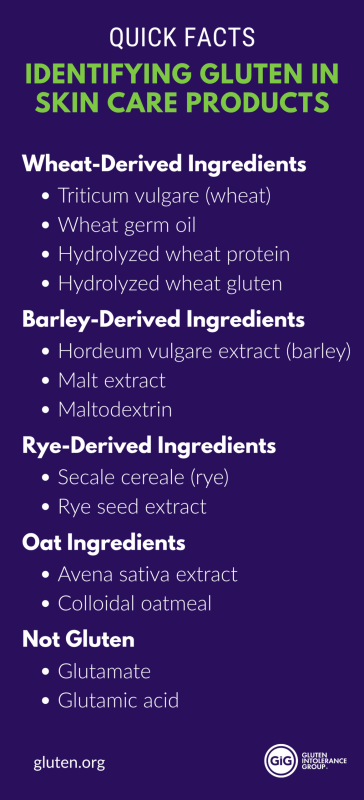
Cosmetics and skin care products are not required to follow FDA gluten-free labeling regulations. This means checking ingredient lists is important. Here are some common gluten-sourced terms to watch for:
- Triticum vulgare (wheat)
- Hordeum vulgare (barley)
- Hydrolyzed wheat protein
- Oat extracts (because oats can be cross-contacted with gluten)
These terms can help guide your choices as you build skin care habits that feel safe and comfortable.
3 Common Types of Skin Reactions
Skin reactions can be confusing when you’re newly gluten-free. A rash or redness doesn’t always mean you’ve been “Glutened,” and most skin issues are not caused by gluten at all. Here are three common types of reactions.
1 – Autoimmune Reactions
The main autoimmune skin reaction connected to gluten is dermatitis herpetiformis (DH). DH happens only when gluten is eaten. It shows up as a very itchy, raised, blister-like rash—often on elbows, knees, buttocks, or the back. This rash is tied directly to celiac disease and improves with a gluten-free diet. While uncomfortable, it does not cause fast, serious symptoms like allergic reactions do.
2 – Allergic Reactions
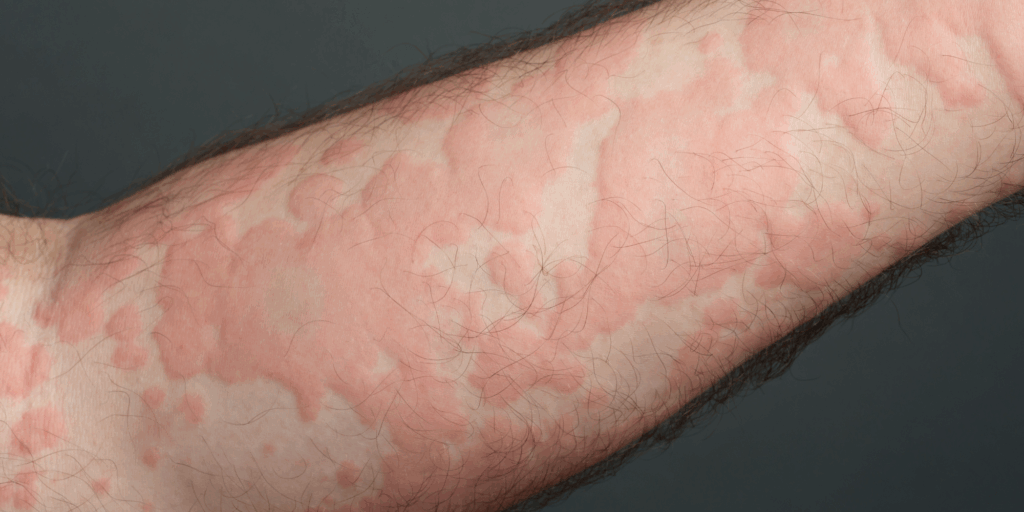
An allergy is different from celiac disease. Allergic reactions happen when your body reacts to something it thinks is dangerous, like wheat, fragrances, preservatives, or even certain plant extracts. These reactions may cause hives, swelling, redness, or burning. In severe cases, swelling can affect breathing. Allergic reactions can happen from skin contact alone and are not related to gluten ingestion.
3 – Sensitivities or Irritant Reactions
These are the most common reactions people experience with skin care products. They happen when a product is too harsh or simply doesn’t agree with your skin. You might notice dryness, redness, itching, or a stinging feeling. This does not involve the immune system and is not caused by gluten.
A Helpful Reminder
Not every rash is a sign of gluten exposure. Most skin issues come from things like dryness, fragrances, over-washing, harsh products, or unrelated conditions. Learning the difference can help you feel more confident about what your skin needs.
Good Skin Care Habits
Simple habits that help you feel in control:
- Use gentle cleansers and light pressure
- Moisturize daily
- Wear sunscreen
- Patch-test new products
- Avoid over-exfoliating
- Limit touching your face
When to talk to a doctor
Here are some signs that it’s time to reach out to your doctor or a dermatologist:
- If a rash looks like Dermatitis Herpetiformis (DH) – Ask a dermatologist about testing the area. DH needs a specific type of skin biopsy.
- If a rash or irritation doesn’t improve or gets worse after a few days
- If you’ve gone on a gluten-free diet and your skin doesn’t get better after a few weeks. It could be a different skin condition.
- If the reaction comes on fast or spreads quickly, especially with swelling of your face, lips, or throat, this is a medical emergency.
- If your skin becomes painful, warm, or shows signs of infection, red streaks, pus, or fever.
- If you’re unsure if a rash is from gluten or something else.
- If the rash keeps coming back.
- If the issue affects your comfort or confidence, you don’t have to wait until something is “severe” to get help.
Quick Ingredient Checklist
Use this quick reference to check for gluten-containing ingredients in your skin care products:
Your skin tells a story about what your body is going through, and healing doesn’t happen overnight. As you learn this new gluten-free lifestyle, give yourself time and patience. Small steps like choosing gentle products, protecting your skin, and understanding how gluten affects the body can make a real difference in how you feel.
Many people notice their skin becoming calmer and clearer as their gut heals, and you may see those changes too. You’re not alone in this.
At GIG, we’re here to give you trusted information, steady support, and encouragement
to help you feel your best inside and out. Every step you take toward understanding your body is a step toward feeling healthier and more empowered on your gluten-free journey.