Boosting Bone Health in Celiac Disease

Written by: Robin Holliday, MS, CN, Bastyr University Dietetic Intern
If you have celiac disease, you may be more likely to develop osteoporosis, which makes bones less dense. But there are simple things you can do to protect your bone health and reduce your risk of fractures. Read on to learn more about the link between celiac disease and osteoporosis and how to keep your bones strong.
Celiac disease (CD) is an autoimmune condition that causes your immune system to react when it encounters a protein called gluten. Wheat, barley, and rye contain these proteins. Wheat derivatives like durum, emmer, spelt, and farro also contain gluten. And don’t forget the sneaky sources like triticale, malt, brewer’s yeast, and wheat starch. If you have CD, you are all too familiar with common problems like diarrhea, anemia, nutrient absorption issues, and weight loss. These symptoms stem from the damaged lining of the small intestine, where nutrient absorption is supposed to occur.
The impact of celiac disease on the body and bone health
When you have untreated CD, it can harm your bones and cause osteoporosis. Osteoporosis makes your bones weaker and easier to break. Risk factors for developing osteoporosis are being underweight, not getting enough calcium, steroid use, smoking, drinking too much alcohol, and having severe CD-related gut damage. Gender can play a role as well. CD diagnosis is 2-3 times more common in females, but males often don’t get a timely diagnosis or the appropriate treatment. This increases a male’s risk of osteoporosis, broken bones, and even death.
Many people diagnosed with CD might have osteopenia, the stage before osteoporosis, or full-blown osteoporosis, especially if they’re 50 or older. We lose more bone than we can build as we age. This imbalance exists between getting rid of old or damaged bone and rebuilding. It may even lead to increased fracture risk and fragility. Additionally, a drop in estrogen production in females during and after menopause creates a more significant imbalance, speeding up bone loss.
Why does celiac disease increase your risk of osteoporosis and fractures?
Knowing why CD increases the risk of osteoporosis is essential because it helps you take steps to keep your bones healthy. CD can interfere with your body’s ability to absorb essential nutrients, like calcium and vitamin D. These two nutrients are crucial for keeping your bones strong and healthy. If your body can’t absorb enough calcium through your diet, it will steal it from your bones. As you can imagine, this eventually breaks down your bones, leaving them weak and brittle. Similarly, low vitamin D absorption can also cause bone breakdown and low levels of inflammation.
CD itself causes inflammation in the body, which is another way your risk for osteoporosis can increase. This inflammation interferes with the forming of special cells that help your bones grow and develop. For example, the body must remove old, damaged bone cells before replacing them with new, healthier ones. These special cells promote this process, but bones stay damaged and weakened if this process can’t happen.
Limiting physical activity can also harm your bone health. Building strong bones and reducing the risk of fractures relies on resistance and high-impact activities. For example, resistance training exercises could include free weights, resistance bands, or your own weight. High-impact activities should involve weight-bearing exercises, such as brisk walking, jogging, climbing stairs, or dancing. However, when your CD symptoms restrict your activity, your bones don’t experience enough stress to initiate the rebuilding process. As time passes, this results in weakened bones more prone to fractures. So, maintaining an active lifestyle is good for your muscles and essential for keeping your bones strong and resilient.
What can you do to minimize your risk of osteoporosis and fractures?
Maintaining a healthy diet with adequate bone-building nutrients is crucial to bone health. First, the amount of calcium you need depends on your age. The recommended daily allowance for those older than 4 years is 1000-1300 mg daily. You can find calcium in a variety of foods. Here is a list to get you started.
- Beans: tempeh, tofu, and white beans.
- Cooked dark leafy greens: Bok choy, collard greens, spinach, and kale.
- Fortified dairy alternatives.
- Fruit: dates, fortified orange juice, and oranges.
- Nuts & seeds: almonds, chia seeds, and sesame seeds.
- Seafood: canned sardines, canned salmon with bones, and shrimp
- Starchy vegetables: acorn squash, potatoes, and sweet potatoes.
- Vegetables: asparagus, broccoli, and Brussels sprouts.
As for vitamin D, the correct dosage depends on age, skin type, and where you live. The recommended daily allowance for those older than 1 year is 600-800 IU. Food sources include dairy and fortified dairy alternatives, certain fish, and cod fish liver oil. Getting the recommended amount of vitamin D through diet alone is challenging. Supplementation is, therefore, often recommended.
Watching what you eat can significantly reduce your risk of osteoporosis, but the first step is removing gluten. Sticking to a gluten-free diet (GFD) is critical in allowing your gut to heal so your body can absorb these nutrients. Studies have shown that sticking to a GFD for 1-2 years can make vitamin D and calcium levels return to normal. Participants used supplements to do this. This, in turn, will improve bone mass and reduce fracture risk. The time of diagnosis will determine the level of improvement. For instance, more improvement occurs in those with lower bone mineral density.
Check out this graphic for Build-a-Bowl for Bone Health.
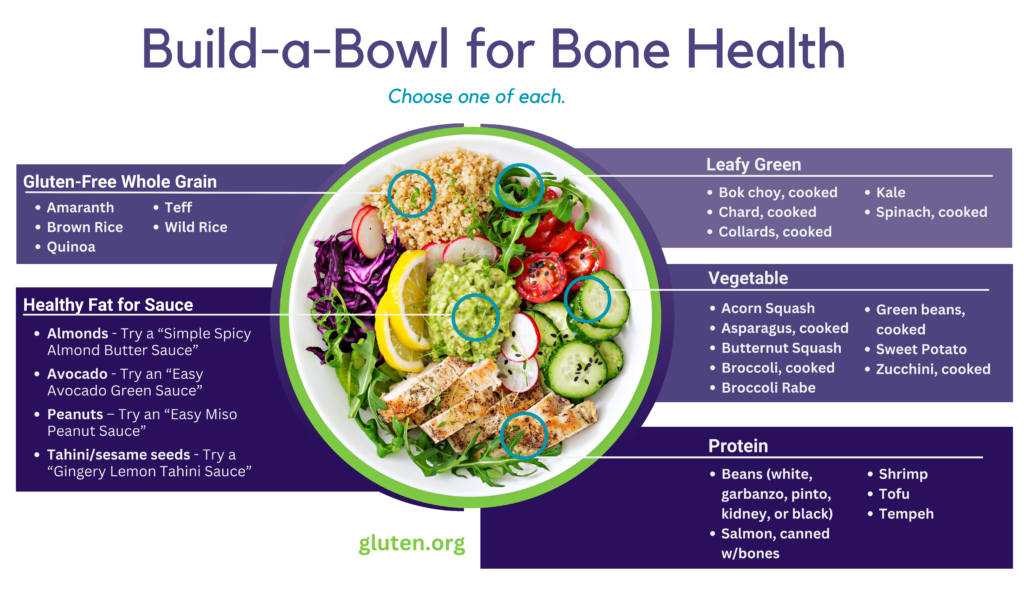
Choose 1 Healthy Fat for Your Sauce
Simple Spicy Almond Butter Sauce by Gathered Nutrition
Easy Avocado Green Sauce by The Real Food Dietitians
Easy Miso Peanut Sauce by Walder Wellness
Gingery Lemon Tahini Sauce by Minimalist Baker
How do I know if I have osteoporosis?
If you’re concerned about osteoporosis, you can take steps to find out. Start by talking to your doctor or going to a health clinic. If you have CD, it’s important to consider getting a bone mineral density (BMD) test about a year after you start a gluten-free diet. Especially if you have risk factors like previous fractures, using steroids, being less active, smoking, or drinking a lot of alcohol.
When testing for osteoporosis, the most common method used is dual-energy X-ray absorptiometry (DEXA). It’s a non-invasive and painless procedure that doesn’t involve needles or instruments touching your skin or body. The amount of radiation is minimal, like what you’d encounter during a short flight. A peripheral DEXA (pDEXA) test uses just your arm, leg, wrist, fingers, or heel. You can use it as an initial screening tool to identify individuals who may benefit from additional bone testing.
Early CD diagnosis and treatment are essential for preventing and managing osteoporosis. A healthy diet, regular exercise, and quitting smoking can enhance bone health and reduce fracture risk in CD individuals. If you’re concerned about osteoporosis, consult your doctor to discuss the best approach to diagnose and manage your bone health.
References:
- Ganji R, Moghbeli M, Sadeghi R, et al. Prevalence of osteoporosis and osteopenia in men and premenopausal women with celiac disease: a systematic review. Nutr J. 2019;18(1):9. Published 2019 Feb 7. doi:10.1186/s12937-019-0434-6
- Kondapalli AV, Walker MD. Celiac disease and bone. Arch Endocrinol Metab. 2022;66(5):756-764. doi:10.20945/2359-3997000000561
- Al-Toma A, Herman A, Lems WF, et al. The Dietary and Non-Dietary Management of Osteoporosis in Adult-Onset Celiac Disease: Current Status and Practical Guidance. 2022;14(21):4554. Published 2022 Oct 28. doi:10.3390/nu14214554
- Micic D, Rao VL, Semrad CE. Celiac Disease and Its Role in the Development of Metabolic Bone Disease. J Clin Densitom. 2020;23(2):190-199. doi:10.1016/j.jocd.2019.06.005
- Evaluation of Bone Health/Bone Density Testing. Bone Health and Osteoporosis Foundation. Last Reviewed March 2022. Accessed October 2023. https://bit.ly/3tOGfmK.