Tackling food insecurity in the gluten-free community starts with GIG Cares
Share
Food insecurity is not just a gluten-free problem. Feeding America estimated that 1 in 8 experience food insecurity. However, a medically-necessary diet makes food insecurity that much harder.
For example, most food pantries do not stock gluten-free products, and if they do, they are put into the general supply and not reserved for those with celiac disease. When you have celiac disease, food insecurity may cause reduced adherence to a gluten-free diet. When there’s simply not enough in the budget, the increased cost of gluten-free foods makes it a hard choice between health and survival. Price comparisons have found that some gluten-free food can be 258% more expensive than their gluten-containing counter parts!
Like the rest of the country, food insecurity increased for those who are on a gluten-free diet during the pandemic. Sadly, one study showed that 1 in 10 households with a child on a gluten-free diet had to eat gluten due to limited gluten-free food. Intentional gluten ingestion doubled during the pandemic. It doesn’t have to be this way.
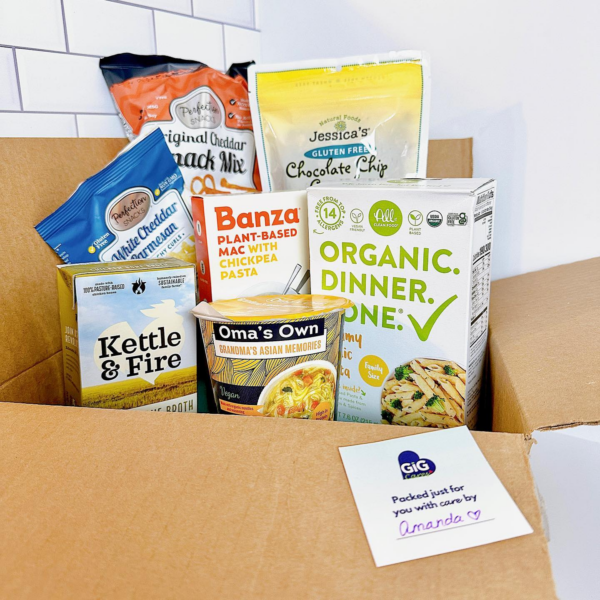
GIG is proud to partner with GIG Cares, to provide the financial support it needs to tackle food insecurity in the gluten-free community. In its first year of operation, GIG Cares has worked to provide supplementary gluten-free food to over 350 families with our monthly food boxes.
The vast majority of our GIG Cares “Cutting Costs” box recipients can’t afford to eat balanced meals, and often run out of safe food between paychecks. Most cut down the size of their meals or skipped meals because there wasn’t enough money for safe food.
We hope to provide 500 families with supplementary food in 2023, but we need your help.
All statistics cited from “Food Insecurity and Celiac Disease: Implementation of a Clinical Screening Program and Impact on Gluten-Free Dietary Adherence” 2022, Boston Children’s Hospital